Doordash
Case study: Product Experience Matrix
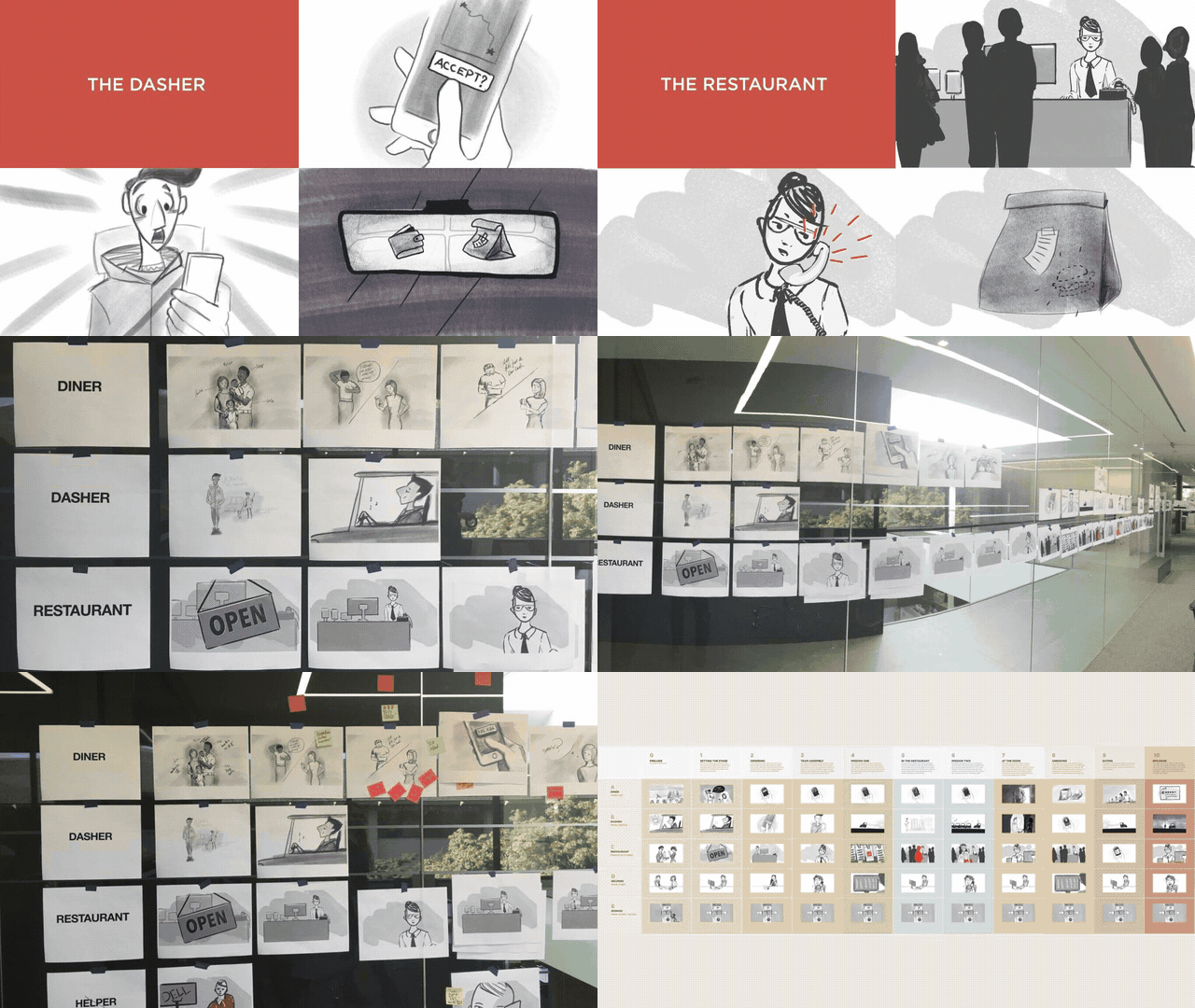
At a critical moment in Doordash's growth, we needed a way to help the team win against formidable competitors and to overcome internal strife. The solution would require inventing an entirely new way to visualize a complex product called a Product Experience Matrix (PXM). It combines three things I love: storyboards, the layout of an orchestral score, and traditional user journeys. The result operates both horizontally and vertically so that each team can see how their work impacts the others.
Timeline
- 01
The Problem
In 2016, Doordash was not yet the deca-billion-dollar giant it is today. The team was fighting against intense competition from the outside, and struggles within. Inside the building, everyone was a high performer, but each team was operating as separate units, with limited communication and collaboration across teams. We needed a way to align everyone's work to pointed in the same direction. But a mission statement or a rallying cry was not going to be enough. We needed to see it.
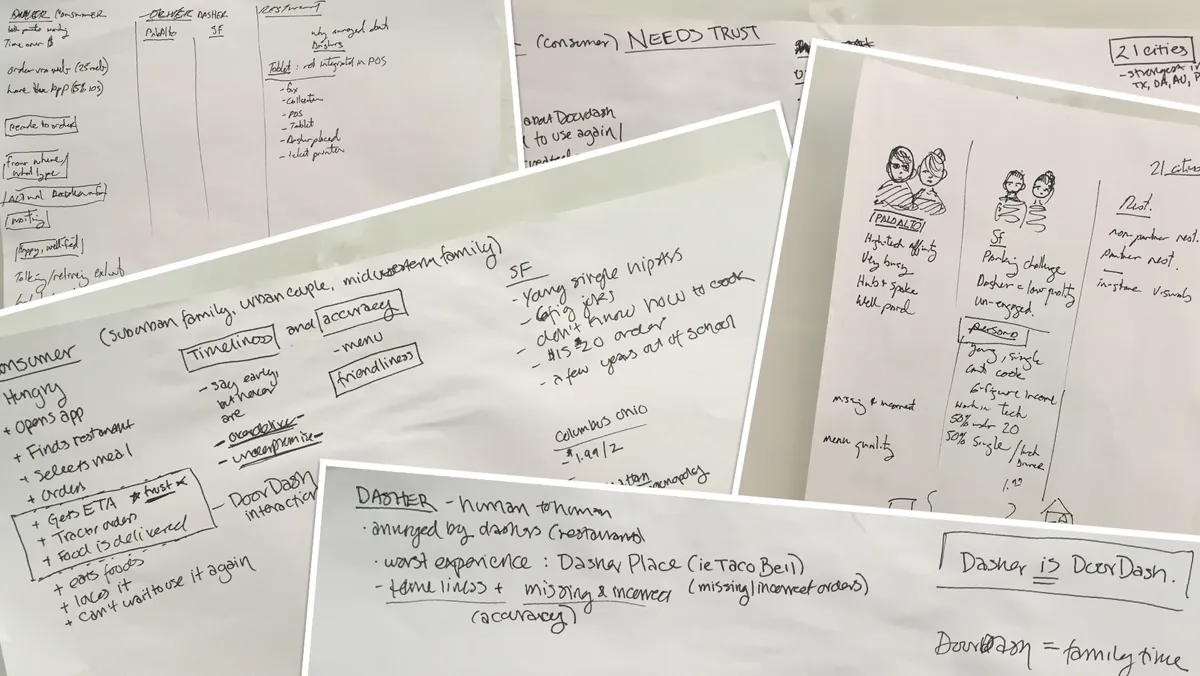
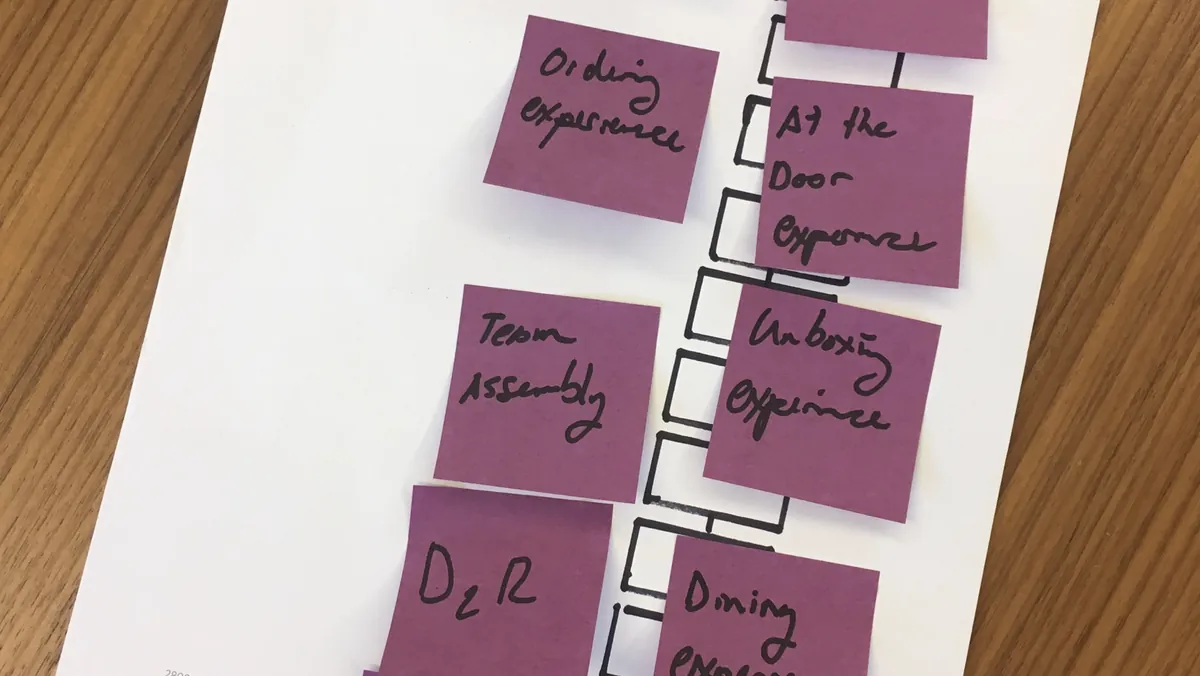
Early notes and questions from the first conversations. - 02
Get in Character
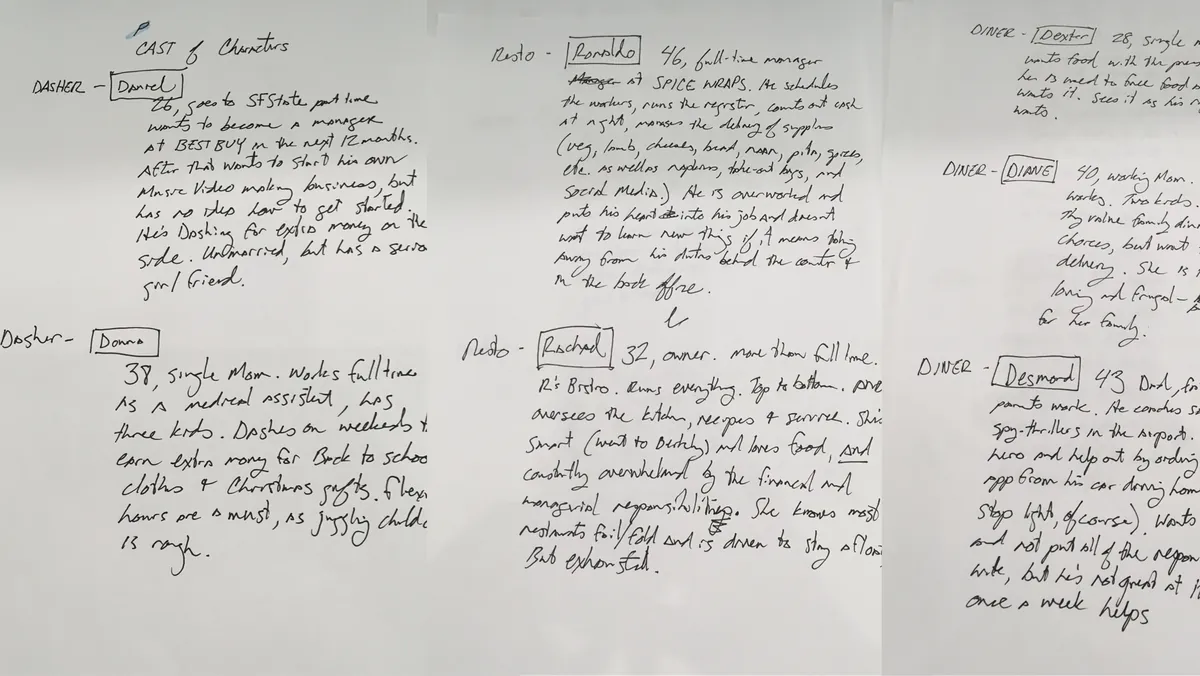
We started by poring through the Doordash design team's user research. They had all taken turns as actual on-the-ground dashers to get a sense of the problems that happen when trying to complete a pick-up and delivery. They had interviewed customers and restaurant managers and dashers. Taking all this in, I pretended to be a screenwriter again, and wrote up fictional character sheets for each persona. I wrote them as if I was getting ready to cast them in a movie. I wrote out story lines and hopes and dreams and failures and desires.
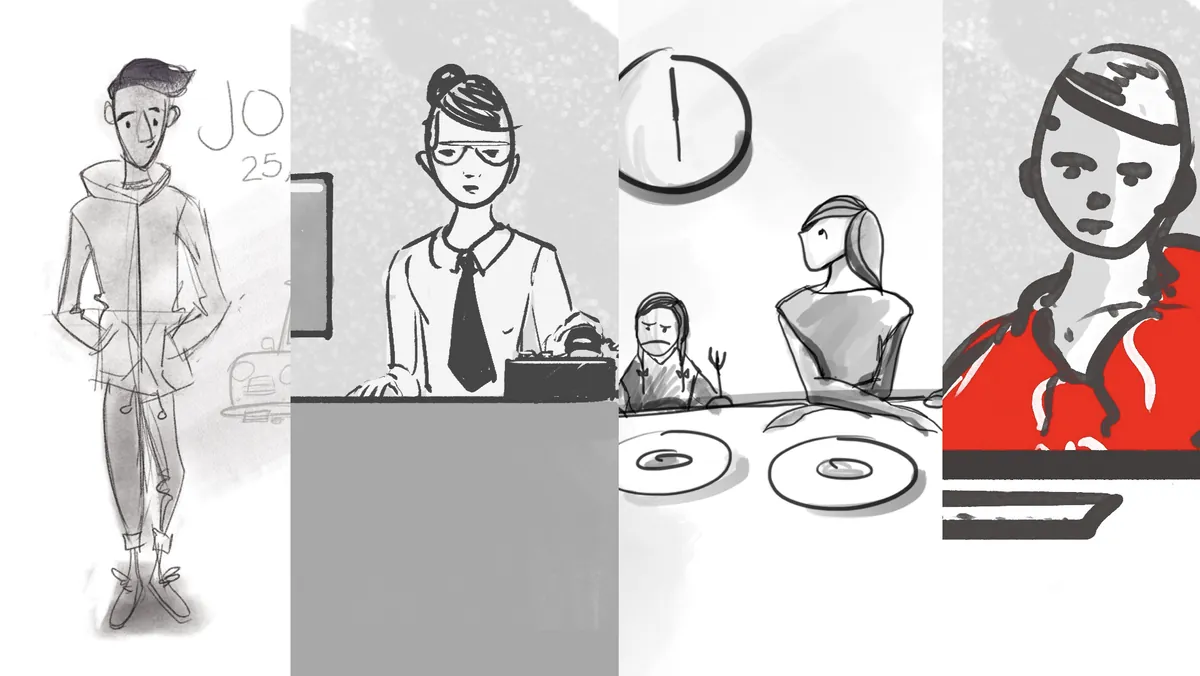
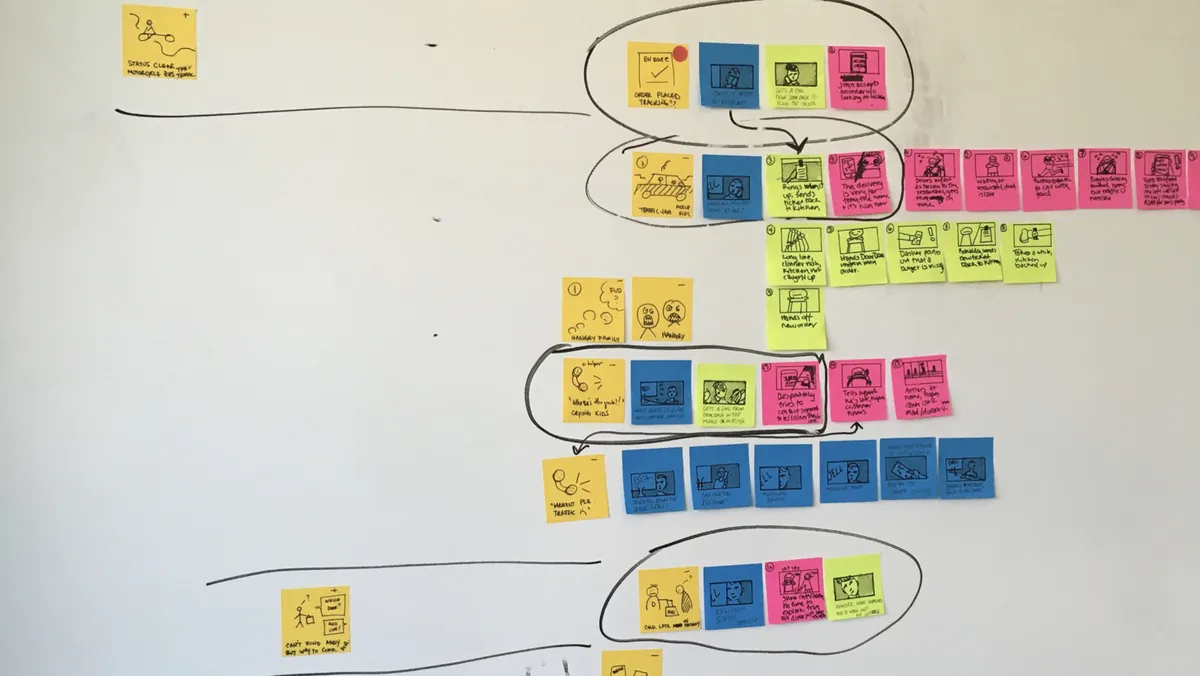
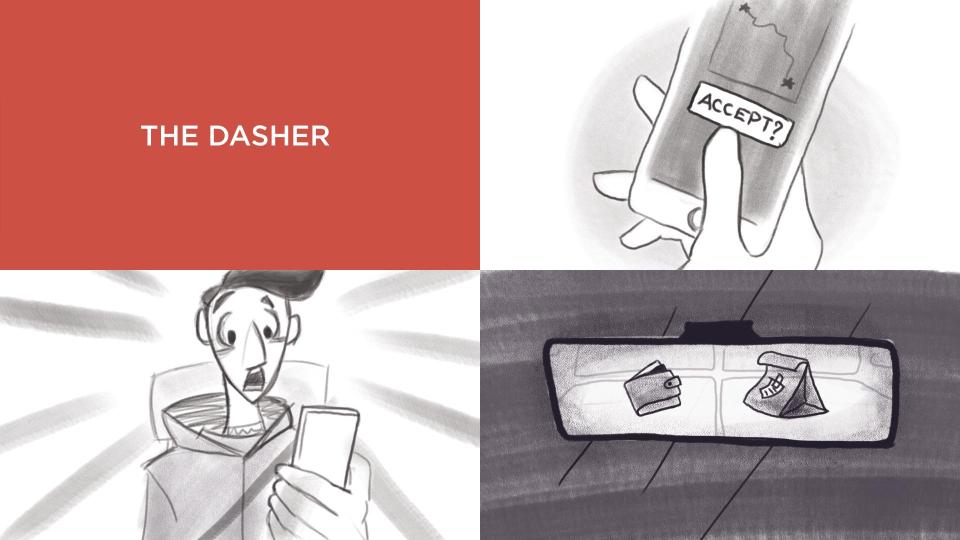
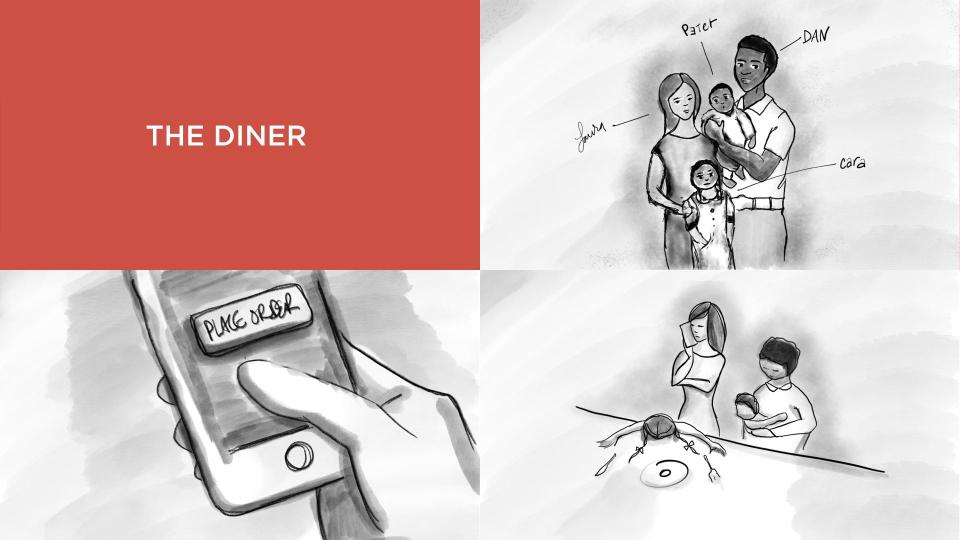
Storyboard sketches for the people and moments in the experience. - 03
Best Case vs. Worse Case
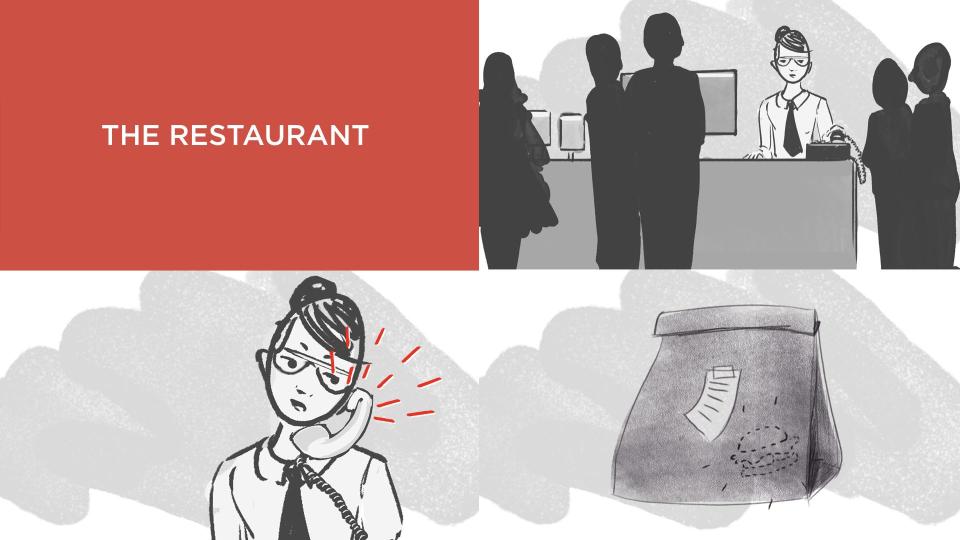
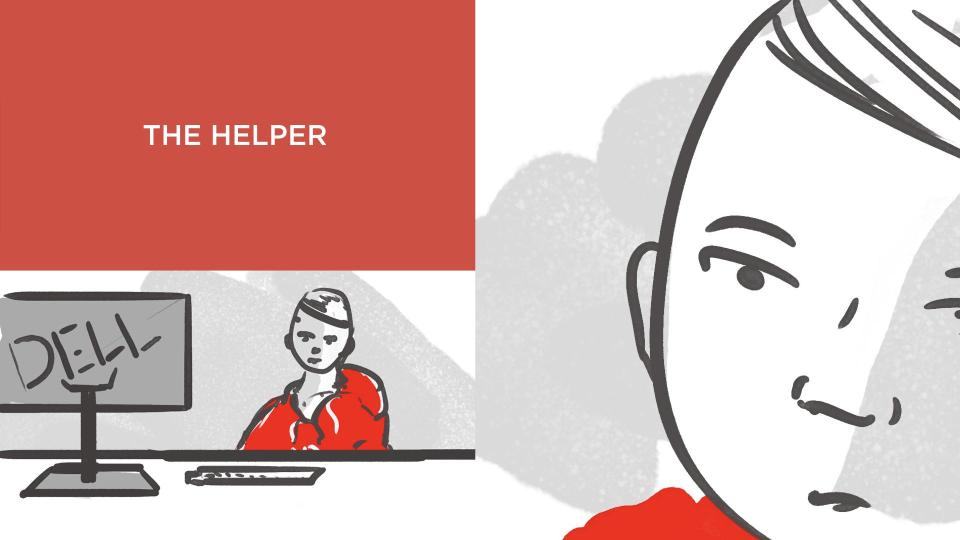
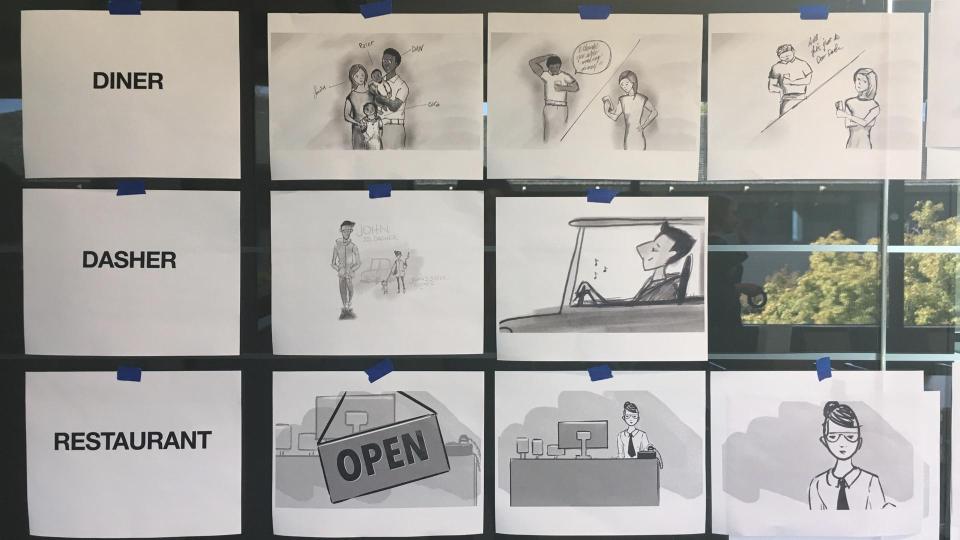
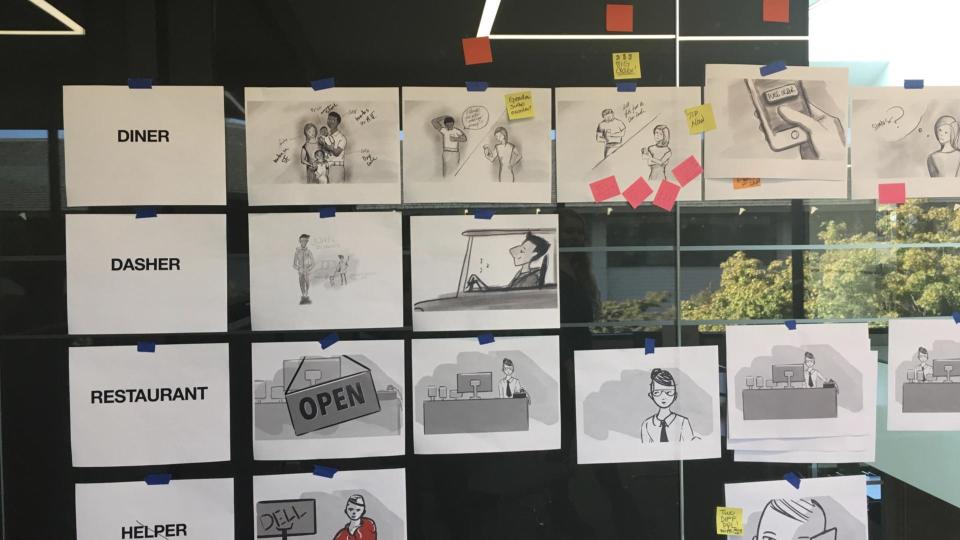
We then got to work storyboarding out the best-case and worst-case scenario for each type of character: the diners, the dashers, the restaurant, and the customer experience helper who worked at DoorDash. By boarding both the best-case and worst-case scenarios, we found problems and assumptions in the experience. So far this was essentially a more visual version of what many people do for user flows, but instead of diagrams, we had drawings of people with their emotional state on display. Three of us, (Alexandra Bond, Coleen Baik and me) drew (and re-drew) the storyboards.
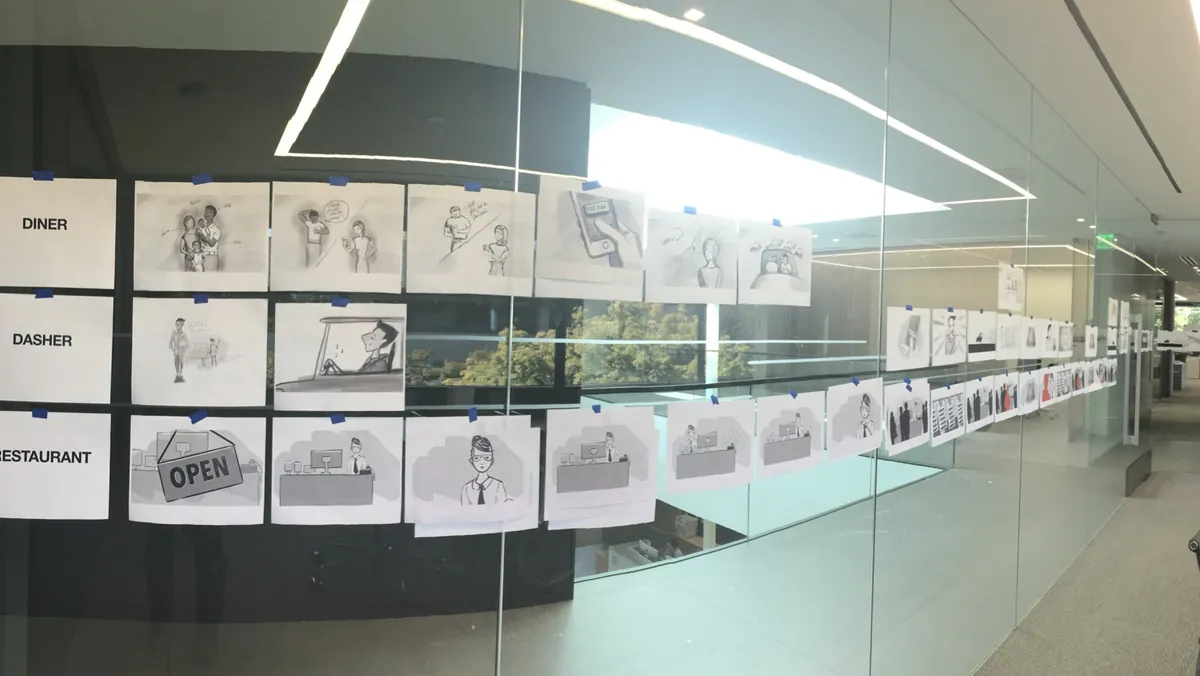
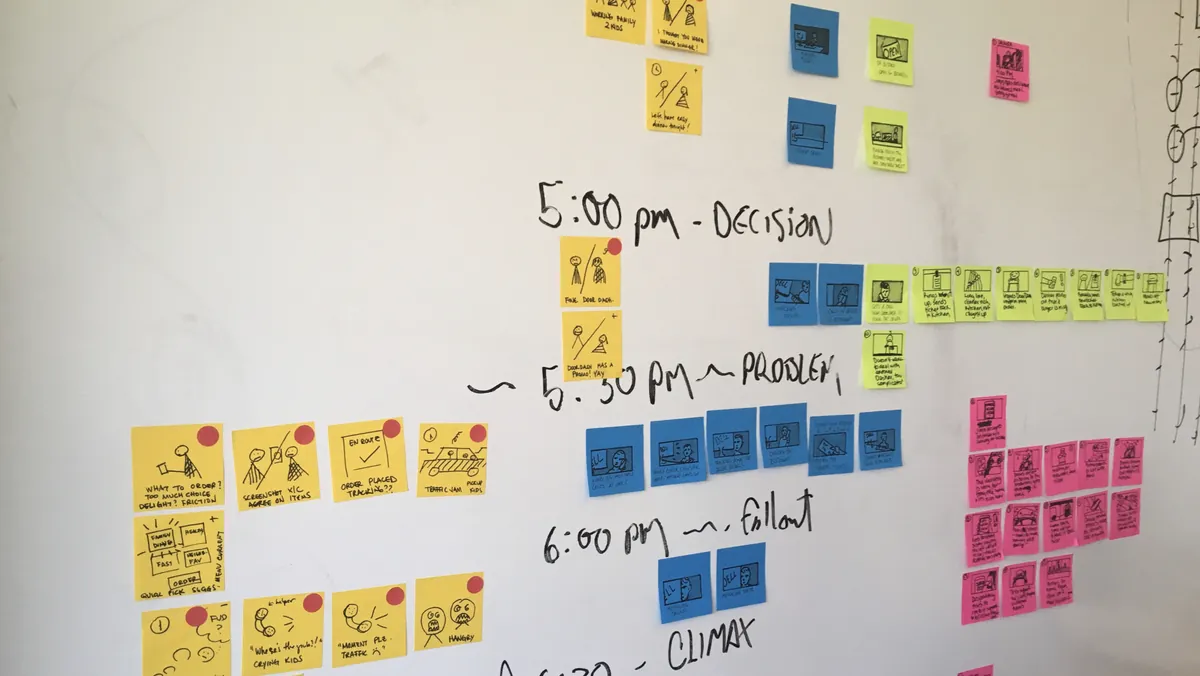
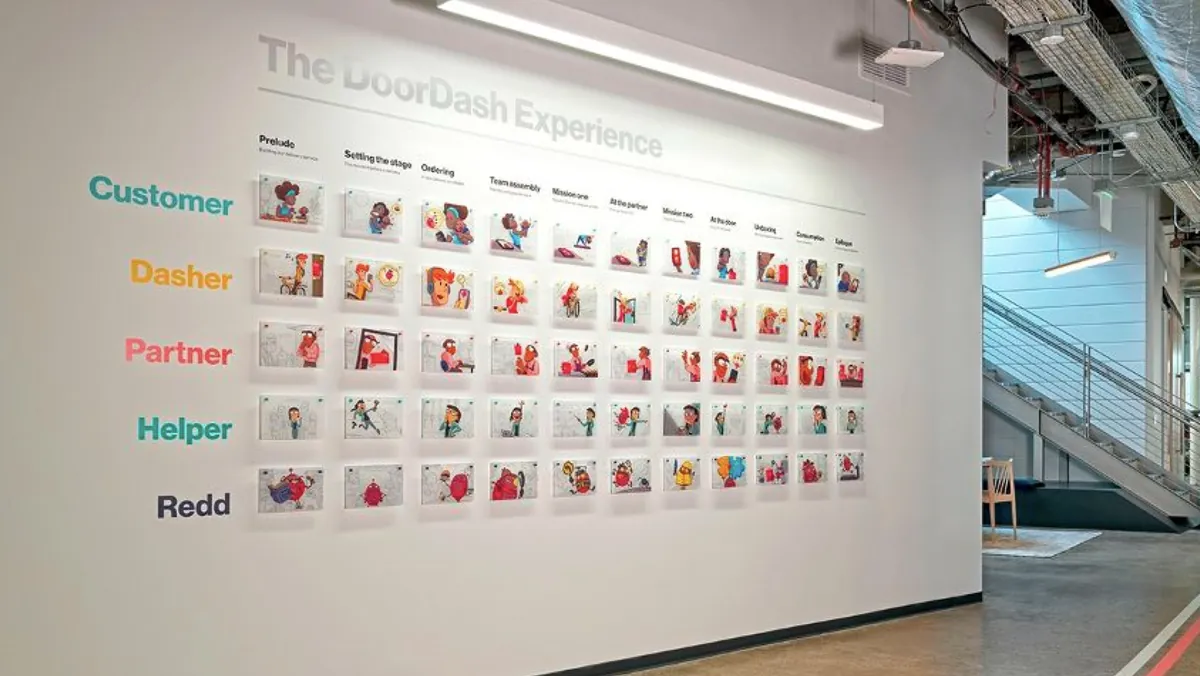
Role cards and storyboards arranged into a wall grid. - 04
The Breakthrough
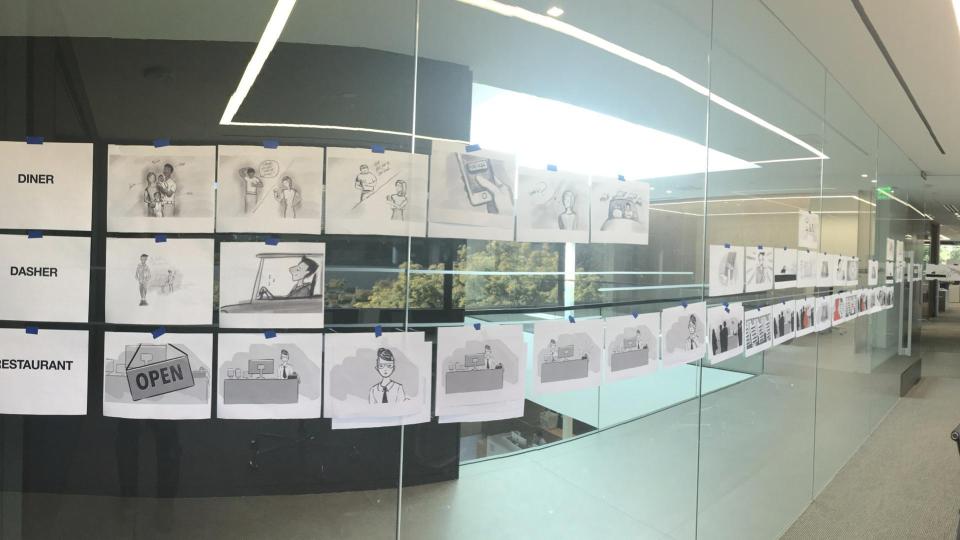
We combined the best-and-worst stories into a typical story. So far so good. But then the moment of inspiration struck me and I knew where to take the project. I stacked them on top of each other, and aligned the events that happened at the same time, factoring out the commonalities like one might factor out common elements in an algebra problem and had a vision of the orchestral score where it could all come together aligned along shared time events. This turned the stories from a series of narrative arcs into a matrix. This meant you could read both the horizontal stories and the vertical stories. This meant you could see what was happening away from the product and on the ground. For instance, when the dasher is at the restaurant and trying to pick up the food, the family doesn't have anything they need to do (they've already ordered and paid), but this moment is precisely the moment when the family is at its most emotionally vulnerable, as they are worried whether dinner is going to work out (hungry, crying kids, stressed parents) or not. The solution was to send a notification of assurance describing the current progress. Sometimes the job-to-be-done is psychological, not transactional.
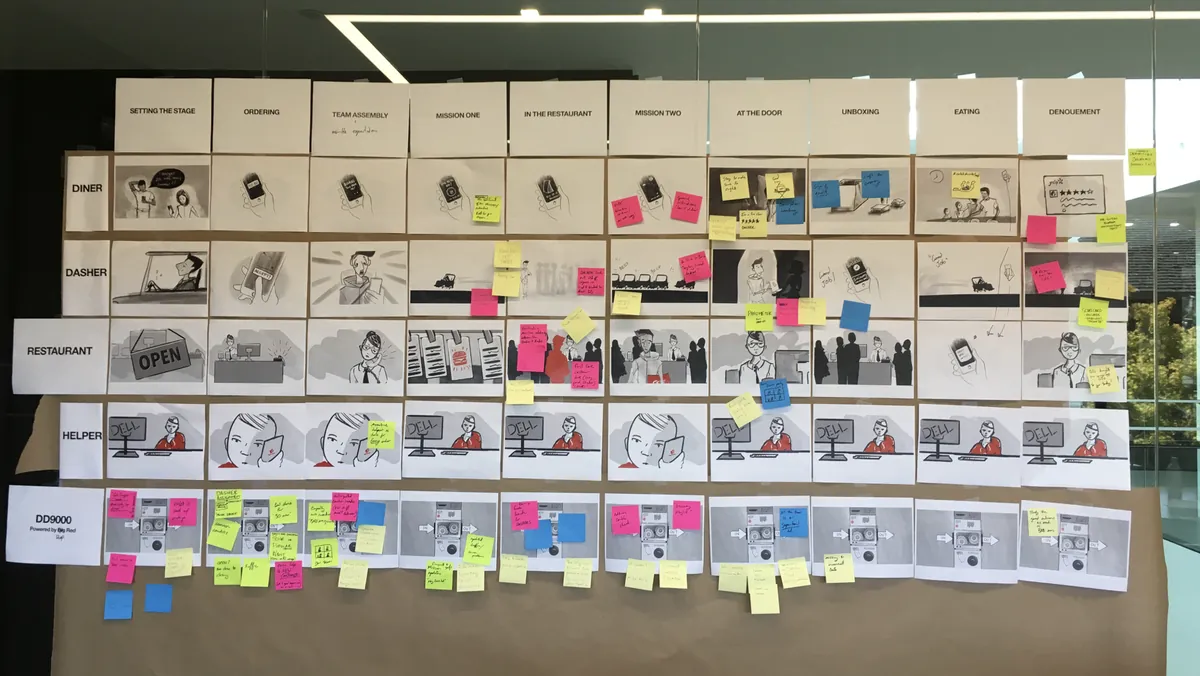
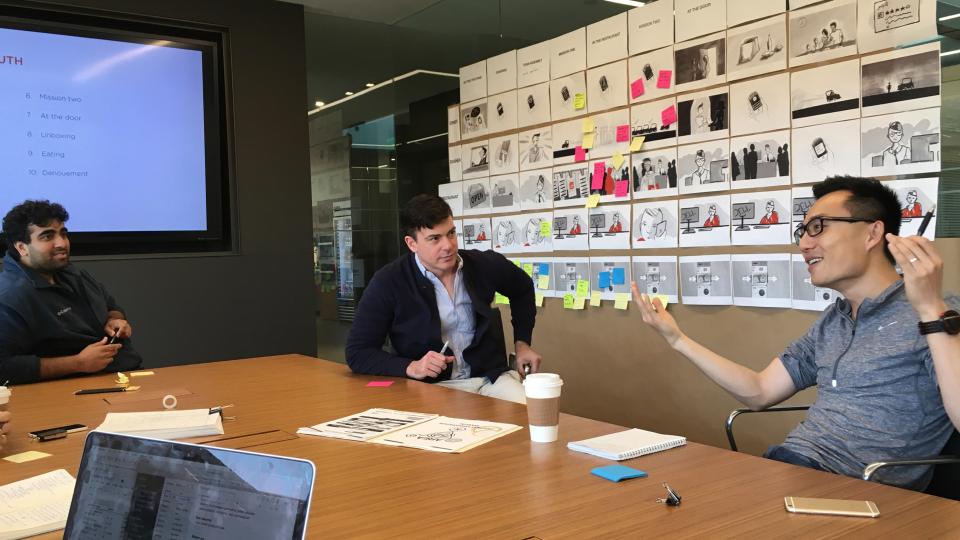
Rough-draft PXM with product and feature suggestions added by the team - 05
60-Ft Wall of Impact
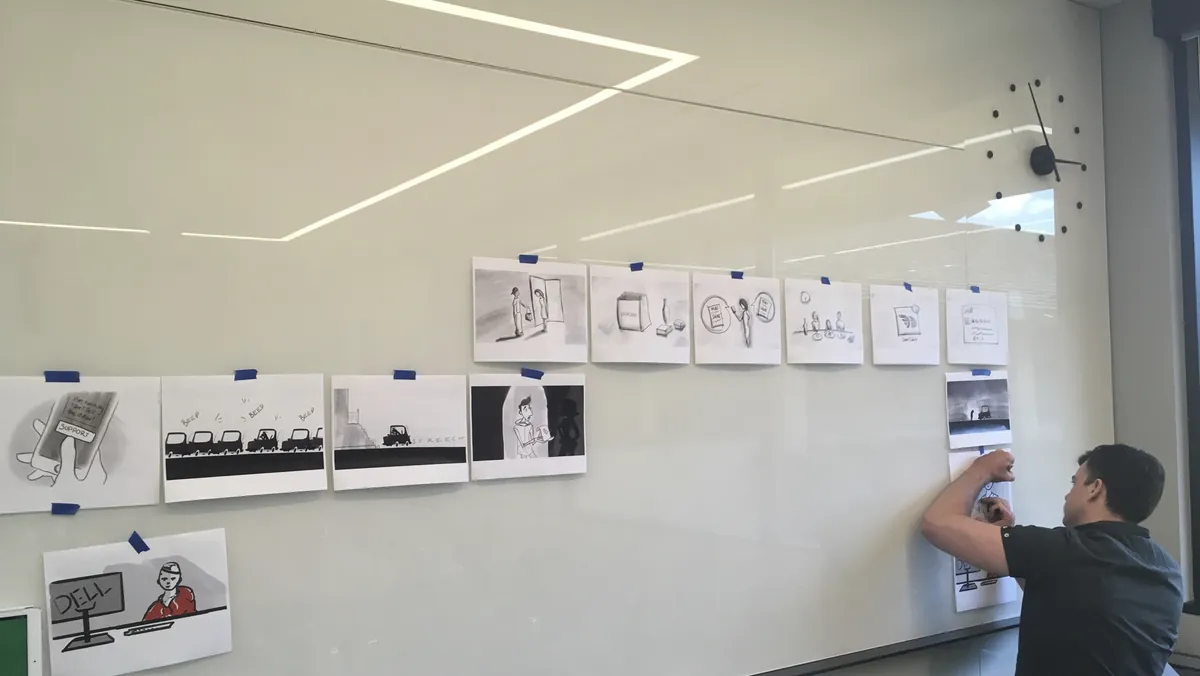
We worked through several versions of the matrix, with members of the exec, prod, eng, design, and sales teams all adding in feature ideas, problems that needed fixing, and understandings of what was happening at each moment. We cleaned it up, printed it out large, and put it up in the cafeteria. The teams held their stand-ups in front of it, as it was impossible to ignore the other teams when you saw both the horizontal and vertical stories. Recruiters would bring candidates to the wall to show how all the work interconnected. Eventually the team aligned and the giant 60-ft matrix was no longer needed. But the images remained important to the culture, and so were re-purposed as meeting room plaques. The PXM process at Doordash resulted in real changes in the product: inspiring or re-affirming the team to create new feedback loops from the CX team to the algo, new notification patterns across horizontal stories, new features for ordering by type of food and past orders and more. But mostly, the impact was teamwork. This seems like a "soft" thing to say, but like PMF, or true love, you don't know how good it feels or how important it is until you've really experienced it.
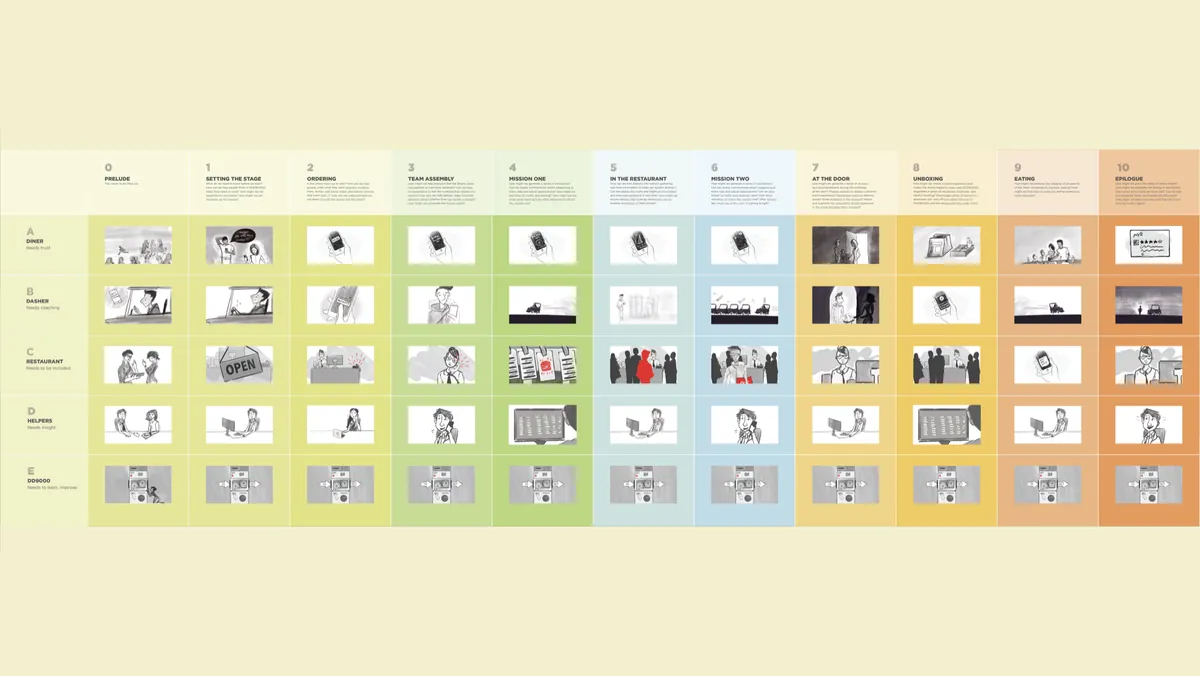
A more finished Product Experience Matrix organized by role and moment.